
Case studies
Systems that keep working after we leave.
Every engagement is measured on verified revenue outcomes. Here's what the systems have produced.
Featured · Growth Capital Allocation System
From budget-by-habit to a ranked, rules-based allocation system.
A mid-market ecommerce operator was investing across SEO, paid, and CRO with no framework for ranking initiatives. We built the allocation model, installed attribution before deploying a dollar, and codified cut/scale rules the team now runs without us.
What the systems produce
Each AI system is built for one growth area, runs in the client's accounts, and is operated by their team.
vs. 9–12 months of manual research
Maps every product in the catalog to the searches it should rank for. A footwear brand with 180+ products went from an impossible manual research backlog to full keyword coverage, with their own team running it.
Footwear brand · 180+ products
of ad spend recovered on average
Checks every campaign against profit thresholds daily and flags where to cut and where to double down, before a bad month becomes a bad quarter. Exposes ads taking credit for sales that would happen anyway.
Average across paid-media engagements
average order value lift
Learns which products sell together and builds the offers automatically. For one home goods brand, that raised average order size 28%: about $800K a year in projected new revenue from traffic they already owned.
Home goods brand
Results reflect individual client engagements; outcomes depend on baseline economics and are verified against contractually defined baselines.
System library
More workflows built to run without us.
These are examples of the workflow infrastructure Brandlark designs, validates, and hands off to client teams. They are system examples, not additional client case-study claims.
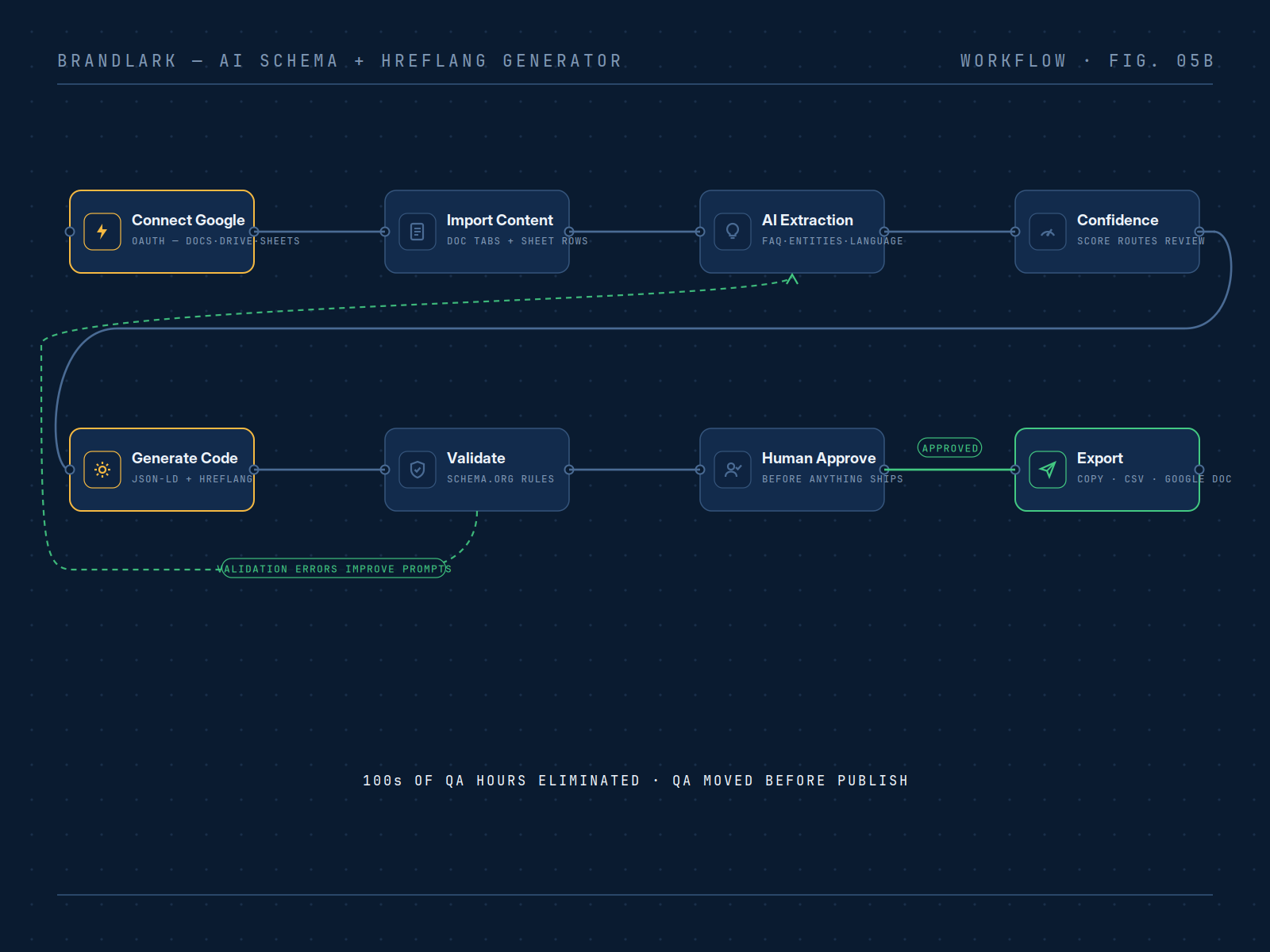
AI Schema + Hreflang Generator
Extracts structured content, validates schema, and routes approved markup for publishing.
_1785715424451-D1kmeleg.png)
AI Outreach Engine
Researches prospects, verifies evidence, and turns approved findings into governed outreach.
Your store's version of these numbers starts with a Blueprint.
A 2–4 week diagnostic that finds your highest-return opportunity and what it's worth, before you commit to anything ongoing.